

El sueño de la razón: La utopía del conductista
Resumen
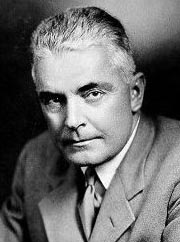
En este texto se presentan dos artículos escritos por John Broadus Watson, fundador del conductismo, y dirigidos al público general. A través de ellos se discute el papel de las utopías en ciencia, el contexto social del surgimiento del conductismo y las ideas de los psicólogos de principios del siglo XX sobre las mujeres, la familia y la crianza de los niños.Palabras clave
J. B. Watson, Conductismo radical, Utopía y cienciaCitas
Berlin, I. (1990). El fuste torcido de la humanidad. Barcelona: Península, 1992.
Bernal, J. D. (1929). The World, The Flesh and the Devil: An Inquiry into the Future of the Rational Soul. Londres: Jonathan Cape, 1970.
Buckley, K. W. (1982). The Selling of a Psychologist: John Broadus Watson and the Application of Behavioral Techniques to Advertising. Journal of the History of the Behavioral Sciences 18: 207-221.
Buckely, K. W. (1989). Mechanical Man: John Broadus Watson and the Beginnings of Behaviorism. Nueva York: Guilford Press.
Burnham, J. C. (1968). On the Origins of Behaviorism. Journal of the History of the Behavioral Sciences 4: 143-151.
Cohen, D. (1979). J. B. Watson: The Founder of Behaviourism. Londres: Routledge and Kegan Paul.
Davis, J. C. (1984). Science and Utopia: The History of a Dilemma, En E. Mendelsohn y H.Nowotny (Eds.). Nineteen Eighty-Four: Science between Utopia and Dystopia (pp. 21-48) (Sociology of the Social Sciences, vol. 8). Dordrecht: Reidel.
Furumoto, L. (1987), On the Margins: Women and the Professionalization of Psychology in the United States, 1890-1940. En M.G. Ash y W.R. Woodward (eds.) (1987), Psychology in Twentieth-Century Thought and Society, Cambridge/Nueva York: Cambridge University Press.
García Dauder, S. (2005), Psicología y Feminismo. Historia olvidada de las mujeres pioneras en Psicología. Madrid: Narcea.
Grabner, I. y W. Reiter (1984), Meddling with ‘Politicks’: Some Conjectures about the Relationship between Science and Utopia. En E. Mendelsohn y H.Nowotny (Eds.). Nineteen Eighty-Four: Science between Utopia and Dystopia (pp. 253-259) (Sociology of the Social Sciences, vol. 8). Dordrecht: Reidel.
Gilman, Ch. P. (1915). Herland. Nueva York: Pantheon, 1979.
González García, M. I. (1993). El conductismo watsoniano y la polémica herencia-ambiente. Psicothema 5/1: 111-123.
Haldane, J. B. S. (1923). Daedalus, or the Future of Science. Londres: Chatto & Windus.
Hall, G. S. (1920). The Fall of Atlantics. En Recreations of a Psychologist, Nueva York: Appleton.
Harris, B. (1984). ’Give Me a Dozen of Healthy Infants…’: John B. Watson’s Popular Advice on Childrearing, Women, and the Family. En Lewin, M. (Ed.). In the Shadow of the Past: Psychology Portrays the Sexes (pp. 126-154). Nueva York: Columbia University Press.
Jasanoff, S. (Ed.) (2004). States of Knowledge. The co-production of science and social order. Nueva York: Routledge.
Karier, C. (1986). Scientists of the Mind. Chicago: University of Illinois Press.
Kumar, K. (1991). Utopianism. Buckingham: Open University Press.
Nowotny, H. (1984). Science and Utopia: On the Social Ordering of the Future. En E. Mendelsohn y H.Nowotny (Eds.). Nineteen Eighty-Four: Science between Utopia and Dystopia (pp. 3-18) (Sociology of the Social Sciences, vol. 8). Dordrecht: Reidel.pp.
McDougall, W. (1921). The Island of Eugenia. En National Welfare and National Decay, Londres: Methuen.
Morawski, J. G. (1982). Assessing Psychology’s Moral Herigage Through Our Neglected Utopias. American Psychologist, 37: 1082-1095.
Morawski, J. G. (1984). Not Quite New Worlds: Psychologists’ Conception of the Ideal Family in the Twenties. En Lewin, M. (Ed.). In the Shadow of the Past: Psychology Portrays the Sexes (pp. 97-123). Nueva York: Columbia University Press.
Münsterberg, H. (1916). Tomorrow: Letters to a Friend in Germany. Nueva York: Appleton.
O’Donnell, J. M. (1985). The Origins of Behaviorism. American Psychology. 1870-1920. Nueva York: New York University Press.
Samelson, F. (1981). Struggle for Scientific Authority: the Reception of Watson’s Behaviorism. 1913-1920. Journal of the History of the Behavioral Sciences, 17: 399-425.
Samuelson, F. (1985). Organizing the Kingdom of Behavior: Academic Battles and Organizational Policies in the Twenties. Journal of the History of the Behavioral Sciences, 21: 33-47.
Skinner, B. F. (1948). Walden Dos. Barcelona: Martínez Roca, 1984.
Watson, J. B. (1913). Psychology as the Behaviorist Views It. Psychological Review, 23: 158-177.
Watson, J. B. (1917). An Attempted Formulation of the Scope of Behavior Psychology. Psychological Review, 24: 329-352.
Watson, J. B. (1924/1930). Behaviorism. New York: Norton, 1970.
Watson, J. B. (1927). The Weakness of Women. Nation, 125/3235: 9-10.
Watson, J. B. (1929). Should a Psychologist Have More Than One Mother?. Liberty Magazine, june 31-35.
Watson, J. B. (1936). John Broadus Watson. En: C. Murchison (ed.) (1936), A History of Psychology in Autobiography, volumen II, Worcester, MA: Clark University Press.
Weingart, P. (1984). Eugenic Utopias –Blueprints for the Rationalization of Human Evolution. En E. Mendelsohn y H.Nowotny (Eds.). Nineteen Eighty-Four: Science between Utopia and Dystopia (pp. 173-187) (Sociology of the Social Sciences, vol. 8). Dordrecht: Reidel.
Publicado
Cómo citar
Descargas
Derechos de autor 2009 Marta Gonzalez García

Esta obra está bajo una licencia internacional Creative Commons Atribución-NoComercial-SinDerivadas 4.0.