

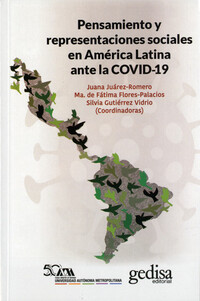
Reseña de Juárez, Flores y Gutiérrez (2025). Pensamiento y representaciones sociales en Latinoamérica frente a la COVID-19
Resumo
El texto describe, discute y pormenoriza el libro reseñado, exponiendo sus riquezas, sus potencialidades y sus áreas de mejora. Pese a tratarse de un trabajo colectivo, identifica también las líneas transversales comunes en todos los trabajos.
Palavras-chave
Representaciones sociales, COVID-19, Psicología SocialReferências
Hałas, Elżbieta. (2008). Social symbolism: Forms and functions – a pragmatist perspective. En Norman K. Denzin (Ed.), Studies in Symbolic Interaction (Vol. 30, pp. 131–149). Emerald Group Publishing Limited. https://doi.org/10.1016/S0163-2396(08)30008-8 DOI: https://doi.org/10.1016/S0163-2396(08)30008-8
Povinelli, Elizabeth A. (2011). Economies of abandonment: Social Belonging and Endurance in Late Liberalism. Duke University Press. DOI: https://doi.org/10.1515/9780822394570
Rose, Nikolas. (1996). Inventing our selves: Psychology, power and personhood. Cambridge University Press. https://doi.org/10.1017/CBO9780511752179 DOI: https://doi.org/10.1017/CBO9780511752179
Scott, James C. (1985). Weapons of the Weak: Everyday Forms of Peasant Resistance. Yale University Press.
Scott, James C. (1989). The Art of Not Being Governed: An Anarchist History of Upland Southeast Asia. Yale University Press.
Publicado
Como Citar
Downloads
Copyright (c) 2025 Salvador Iván Rodríguez Preciado

Este trabalho está licenciado sob uma licença Creative Commons Attribution 4.0 International License.